Search Results for: primary mathematics vs math in focus

Singapore Math Source Quick Start Guide

Since 2008, I’ve worked as Singapore Math® Trainer and Consultant. Each year, I have the pleasure of introducing the curriculum to thousands of teachers, administrators and parents and help dozens of schools implement and use Math from Singapore.

Without hesitation, I can say that the Singaporean curriculum provides a great foundation for elementary math success. But it is not a silver bullet. A school or district implementing the curriculum requires leadership and community-wide support, willingness to learn a new approach and specific training in the Singapore Math® Method. SingaporeMathSource.com is chock full of tools and tips to help teachers and students, administrators and parents to understand and use the curriculum successfully. If you need help or advice as you consider the curriculum, don’t  hesitate to get in touch with me.

In the meantime, consider taking a look at a few of the posts and pages that visitors tell me are the most valuable:

General Information on the Curriculum

For Teachers

For Teachers and Parents

For Teachers, Parents and Students

Cassy’s Adventures

If you have any suggestions or comments, please let me know. Enjoy your exploration.

Share:

Singapore Math and Math Journal Writing

Out in Left Field posts a Math Problem of the Week comparing different curricula that schools use. Last week’s Riddles in 2nd Grade Investigations vs. Singapore Math and the ensuing comments brought up discussion on the value of writing in the mathematics classroom.  I picked up a book entitled: Journal Writing in the Mathematics Classroom (Primary) when I was in Singapore. It is written and published by professors at Singapore’s National Institute of Education.

Among the chapters listed:

Why use Journal Writing?

Journal writing reinforces the learning and provides pupils with opportunities to engage in reflection, question their own understanding, connect the abstract and the concrete, and apply the knowledge they have acquired to solve problems.

How to Carry Out Journal Writing?

This section starts with an this powerful statement about journal writing in the classroom:

Journal writing is a complex process that requires effort and patience.

The authors further suggest that these open-ended prompts encourage pupils to write about their opinions and feelings on mathematics. They have adapted and describe three types of general writing prompts:

1. Affective or Attitudinal (How do you feel?)

  • My best kept secret about math is …
  • If math could be a colour (shape, sound) it would be … because

2. Mathematical content (What is it about?)

  • How would you describe a …
  • What patterns do you notice in …

3. Process (Explain how!)

  • Find something that you learned today that is similar to something you already knew.
  • You know several ways to … Which method is you favourite? Why?

There is a list of 15 of each type of general writing prompt. The bulk of the book, however, focuses on specific writing prompts that are based on mathematical topics.

Possible Negative Aspects of Journal Writing

(Lessons learned the hard way when I was teaching!)

    a. The potential for the teacher to hurt pupil’s feelings.
    b. The loss of instructional time to teach syllabuses
    c. Tremendous increase in the marking load of the teacher.
    d. Emphasis on language proficiency

Scoring Rubrics and Student Examples

This section includes examples of two types of scoring rubrics: Analytic, which allows for separate evaluation of selected factors and Holistic, which can be used when teachers want to rate student responses more generally.

A Collection of Specific Writing Prompts

Finally, there are 55 specific writing prompts differentiated by grade level and topic. Topics include: Whole Numbers, Fractions, Decimals, Percentage, Ratio, Rate, Measurement, Geometry, Statistics and Algebra. Some examples:

Topic: Whole Numbers
Level: Primary 2 – 6

Write a word problem and make a picture that goes with 4 x 3.

Topic: Decimals
Level: Primary 4 – 6

Find two decimal numbers between 0.2 and 0.3. How many decimal numbers are there between 0.2 and 0.3? Explain.

Share:

Singapore Tops TIMSS 2015!

The 2015 Trends in Math and Science Study (TIMSS) results were recently published. Students in fourth and eighth grades from more than 40 countries worldwide participated in the most recent test. This test marks a 20-year span of comparative mathematics and science achievement data collected and once again East Asian countries topped the charts.

What does the TIMSS test?

The TIMSS tests students’ math and science knowledge. For the sake of this post, we are going to focus on mathematics. Both content domains (Number, Geometry, and Data) and cognitive domains (Knowing, Applying and Reasoning) are tested every four years.  Student achievement is then compared to other participating countries.  Singapore’s students once again ranked number one in the world, marking the fifth time Singapore has scored highest on the TIMSS  since the country first participated in 1995.  Students in the United States trail students in Singapore by 79 points for fourth grade and 103 points for eighth grade.

TIMSS Results for Select Countries – Fourth Grade Mathematics

1995 2003 2007 2011 2015
         
Singapore 625 (1) 594 (1) 599 (2) 606 (1) 618 (1)
Hong Kong-SAR 587 (4) 575 (2) 607 (1) 602 (3) 615 (2)
Republic of Korea 611 (2) 605 (2) 608 (3)
Chinese Taipei 564 (4) 576 (3) 591 (4) 597 (4)
Japan 597 (3) 565 (3) 568 (4) 585 (5) 593 (5)
Russian Federation 532 (9) 544 (6) 542 (9) 564 (7)
England 513 (16) 531 (10) 541 (7) 542 (9) 546 (10)
United States 545 (11) 518 (12) 529 (11) 541 (11) 539 (14)
Average* 529 545 500 500 500

* International Average in 1995 and 2003, Scale Average since 2007

How challenging are the questions?

The questions on the TIMSS can be broken down into four levels, or benchmarks; Advanced, High, Intermediate and Low. The examples below are from fourth-grade problems.

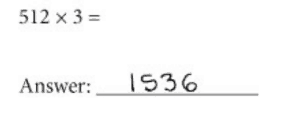
A low-level question tests basic mathematical knowledge:

Percentage of students able to answer a low-level question: 99% Singapore, 98% U.S.


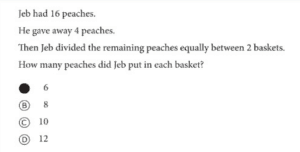
An intermediate level question tests the ability to apply basic mathematical knowledge in simple situations:

Percentage of students able to answer an intermediate level question: 93% Singapore, 79% U.S.


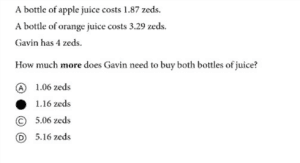
A high-level question tests the ability to apply mathematical knowledge and understanding to solve problems:

Percentage of students able to answer a high-level question: 80% Singapore, 47% U.S.


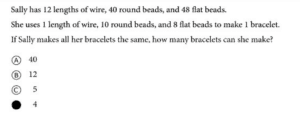
An advanced level question tests the ability to apply knowledge and understanding in a variety of relatively complex situation and to explain mathematical reasoning:

Percentage of students able to answer an advanced level question: 50% Singapore, 14% U.S.

To sum it up, students in the U.S. are really good at solving basic computation questions but struggle with applying their knowledge to solve problems in high and advanced level questions.

For more information about the TIMSS and a complete report, visit http://timssandpirls.bc.edu/timss2015/.

How does Singapore do it?

In a nutshell, a Singapore Math curriculum focuses on deep conceptual understanding and problem-solving with an emphasis on the “why” over the “how” of math.  Concepts are introduced, practiced to mastery and immediately applied to solve both familiar and novel problems. Students are given ample time to grapple with problems to find multiple solutions which develops flexibility with numbers and logical thinking.

In contrast, traditional curricula in the U.S. has tended to focus on memorization and procedures. “Ours is not to reason why; just invert and multiply.”  Math has been taught as a series of steps to follow to tackle what appear to be unrelated concepts. Many concepts are taught per grade level with little time to practice and master before moving on to the next concept; often referred to as a spiraling curriculum. This limits deep mathematical understanding.

What can we do?

There’s still hope. There are a few curricula in the U.S. that follow the Singapore math approach to deepening mathematical understanding and problem-solving.  You can read more about Primary Mathematics and Math in Focus here.

If you are not in a position to change your curriculum, you can integrate some of the best strategies from Singapore into your current curriculum.  Take time to teach basic concepts to mastery, focus on developing number sense with mental math activities and help students to visualize word problems with bar modeling.

Each year more and more schools, school districts and home-schooling parents are making the switch, but just buying new textbooks is not enough. Professional development and teacher training is an often overlooked piece of the puzzle. (That’s where Math Champions comes in. For information on how we can help you use Singapore Mathematics,  please complete the form or send us an email.)

[contact-form to=’cassy@mathchampions.com’ subject=’TIMSS Post Help’][contact-field label=’Name’ type=’name’ required=’1’/][contact-field label=’Email’ type=’email’ required=’1’/][/contact-form]


Source: TIMSS 2015 International Results in Mathematics. Copyright © 2016 TIMSS & PIRLS International Study Center, Lynch School of Education, Boston College, and
International Association for the Evaluation of Educational Achievement. All rights reserved.


Share:

Giving Thanks — Looking Back on 2014

TEXT (4)I’ve just returned from my tenth consecutive week of travel and welcome the arrival of Thanksgiving. A brief break from out-of-town training and coaching jobs affords the opportunity to once again take stock and reflect on the past year, both personally and professionally. (Past Giving Thanks posts are here: 2013, 2012 and 2011)

As I enter my eight year as a Singapore Math® trainer, consultant and coach, I continue to be amazed by the wonderful opportunities that continue to come my way.

I say this every year, but it continues to be true: I am so grateful to be able to champion elementary math education and GET PAID to spend time in classrooms with teachers and students.  I extend my heartfelt thanks to everyone who has played a part in making the year so special.

2014 has been my busiest year ever. I’ve spent more than 30 weeks traveling across North American (and Germany for a week)Cassy Trip-it 2014 to work with schools and present seminars. I’ve been to Denver International Airport so much that Google recognizes it as my office. Don’t get me wrong: I love to travel, especially when the end result is helping teachers hone their skills to make students more competent and confident math learners.

Changing Role and 2014 Highlights

This year, more than half of the schools I visited were repeat and long-term clients where my role often was that of an instructional coach. I still love to present introductory workshops and lead implementation trainings (the Ah Ha! moments are truly priceless), but it’s been especially rewarding to spend time with teachers working at a deeper level.  At these schools, I’ve also hosted lots of parent education events, including hands-on bootcamps, to help ensure that Singaporean methods are reinforced at home. Best of all schools are achieving remarkable results (more on that to come).

There are many highlights from 2014, including:

  • Working with 28 school clients in 9 states and Germany, where I had the opportunity to work with teachers at the International School of Hamburg!
  • Acceptance of proposals to present at the 2015 Annual Conferences at Annual Conferences of both the National Council of Teachers of Mathematics (NCTM, for the second time!) and NCSM (for the first time). Lauri Susi of Conceptua Math is my co-presenter;
  • Presenting Singapore Math Workshops for the Bureau of Education of Research (for the sixth consecutive year!);
  • Presenting  at the Tennessee Conference on Singapore Math Strategies hosted by SDE.
  • Meeting my personal “continuing education” goals by attending:
    • Annual conferences of NCTM and NCSM (for the 6th consecutive year);
    • The National Charter Schools Conference (for the first time);
    • SDE’s National Conference on Singapore Math Strategies (for the second consecutive year); and
  • Earning A-list Preferred status on Southwest Airlines (didn’t I say I love to travel!).
Singapore Math Trainer Cassandra Turner at the International School in Hamburg

Cassy (2nd from L) with teachers and staff at the International School of Hamburg

2014 by the Numbers

2
Continents visited (I’ve now conducted trainings on four continents; c’mon South America and Asia…I’d love to visit there, too)
9
States visited to work with school clients
19
States visited to conduct Singapore Math seminars or trainings
20+
Singapore Math presentations conducted for parents
25
Seminars presented for BER
97+
Days working directly with teachers
Hundreds
of inquiries from teachers, administrators and parents with questions about Singapore Math curriculum responded to
103,448 and counting 
Miles flown 


Special Thanks

My sincere thanks to all the administrators, teachers and support staff I worked with in 2014. ( You know who you are!) I so appreciate your dedication to students and your trust and confidence in me!  A hearty thank you as well to my other long-time partners and supporters:

      • Singapore Math Inc.
      • Bureau of Education of Research (BER)
      • EAI Education
      • Staff Development for Educators (SDE)
One of my favorite evaluations from 2014

One of my favorite evaluations from 2014

Singapore Math Source

Now in its seventh year, SingaporeMathSource.com continues to be an authoritative resource for those seeking information about the curriculum. This year, I completed a long-planned, thorough comparison of the two leading Singapore Math® curricula available in the US: Primary Mathematics and Math in Focus. (Quite a few of my school clients are using Math in Focus). I also updated my popular page on Singapore math iPad apps.

Personal

2014 has been personally gratifying as:

  • We celebrated our youngest son’s high school graduation. It’s hard to believe we have two students at Colorado State University. It’s not hard to believe one is a math major!
  • I once again reached my goal of reading 50 books in the year. As of this date, I am at 89!
  • I continue to serve on the Board of the Middle School Math Institute, a non-profit dedicated to helping students succeed at algebra.
  • I continue to serve on the District Accountability Committee for the Poudre School District.

Looking ahead

2015 promises to be just as busy and exciting. I’m really looking forward to:

  • Continuing to work with many schools that have retained me on a long-term basis;
  • Visiting teachers, administrators and parents at schools that hire me for the first time (believe it or not, my fall 2015 schedule is starting to fill up);
  • Presenting at the 2015 Annual Conferences of NCTM and NCSM in Boston (and hopefully other events);
  • Presenting BER workshops for a seventh consecutive year;
  • Sharing news about the successes some of the schools I work with are achieving — please let me know if you want to be a part of this series; and
  • Other opportunities that are, as yet, unknown. I can’t wait to see what is ahead!

Once again, my sincerest thanks to my clients, colleagues and partners for making 2014 such a wonderful year. If I may be of service at any time, don’t hesitate to get in touch with me.

As passionate as ever about Singapore Mathematics!

-Cassy

Share:

Resources

header2

Looking for resources to supplement the Singapore Math® curriculum?

Singapore Math® Editions – at a Glance: Which series should I buy? See all your options.

Assessments: Singapore Math Assessments Online for home-school use

Best Books to Support Singapore Math® in the Classroom: Supplemental books for students.

Best Books for Grown-Ups Wanting to Learn Singapore Math®: Title says it all, doesn’t it?

Favorite Printable Math Resources: From place value disks to ten-frames to game boards, find all the printable you need here.

Fun Math Practice Sites: These are the sites I use in my after-school Math Club…Sumdog, National Math Bee, interactive base-10 blocks, virtual manipulatives and more.

Handouts from Conferences and Trainings: Powerpoints, games and other materials from our trainings and seminars.

Job Placement Services: Find or list positions.

Math Wall Ideas: Show-off and share your great math walls!

Primary Math v. Math in Focus: Want to know the difference between the two Singapore-based Math curricula? This page will give you an introduction.

Singapore Math® iPad Apps: Reviews of apps that come up you search iTunes for “Singapore Math”

Singapore Math® Web Sites:  Sites from Singapore and around the world.


Share: